What to Do When You Are Locked Out: A Practical Plan
Stay Calm and Assess the Situation
Being locked out of your home or business can feel stressful, but a clear head helps you make good decisions. The first step is to check every possible entry point. Walk around the property and try all doors and windows. Sometimes a back door or a side gate has been left unlocked, or a window is slightly open. If you find an open window, do not climb in unless it is on the ground floor and you are certain it is safe. For a business, also check any roller shutters or fire exits. If nothing is open, you need to decide how to get back inside without causing unnecessary damage.
Your next thought might be to break a window or force a door. That is rarely the best idea. A broken window costs money to replace and can let in weather or intruders before it is fixed. Forced doors can warp or damage the frame, leading to a bigger repair bill. Instead, consider a method that preserves your property: fast non destructive door entry. This approach aims to open a locked door without breaking anything, using tools and techniques that respect the door and lock. It is often quicker than fitting a new pane of glass, and it leaves your home or business secure once the door is closed again.
Check Your Identity and Proof of Address
If you call a professional locksmith, they will need to confirm you are the owner or an authorised occupant. This is a standard security step. Before you call, gather a form of identity such as a driving licence or passport, and a proof of address like a utility bill or council tax statement. For a business, a company credit card or a letterhead with the business address may work. Having these ready speeds up the process. The locksmith cannot proceed without this check, so it saves time to have them at hand.
Inspect the Lock Type
Different locks need different approaches. A standard euro cylinder lock on a uPVC door can often be manipulated or gently opened without damage. An older mortice lock may require careful lock picking. If you have a high-security lock with drill protection, the locksmith will need specialist tools. Look at the lock from the outside. If you see a euro cylinder profile, the door may be opened with a technique that rotates the cylinder without breaking it. If the lock has a hardened steel plate, it is designed to resist drilling, so the entry method will be slower but still possible.
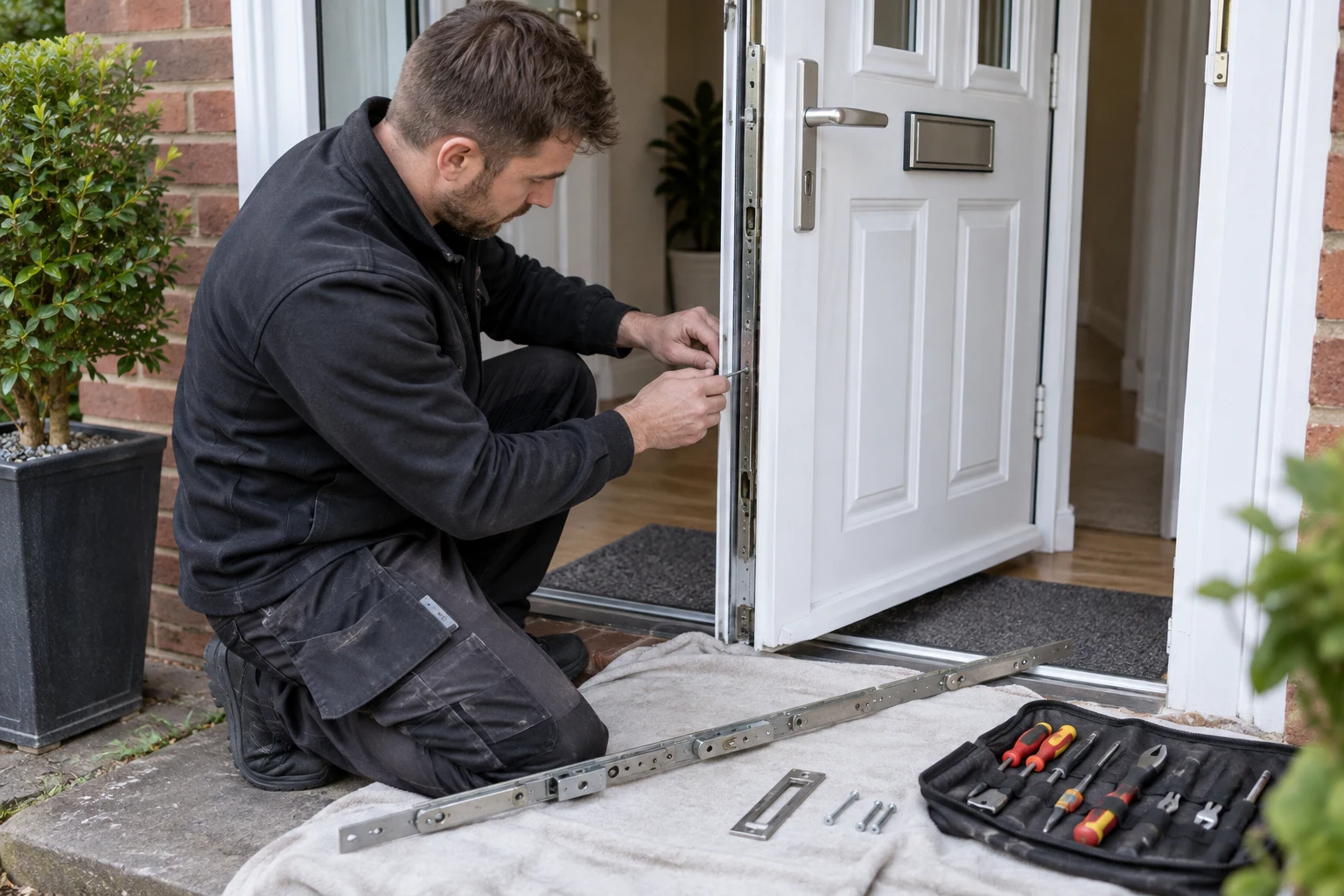
It helps to know whether the door latch is engaged. Sometimes a door is only on the latch, not deadlocked. In that case, a thin tool can slide between the door and frame to push the latch back. This is a simple, non-destructive method. If the door is deadlocked, the latch is locked in place and cannot be pushed back. That is when a locksmith may need to pick the lock or use a tool to rotate the cylinder.
Consider the Time and Circumstances
Time of day matters. If you are locked out at night, you want a quick solution that does not leave the property insecure until morning. Fast non destructive door entry is ideal because it gets you in quickly and lets you lock up again properly. If you are locked out during a work day and you run a business, every minute counts. A broken window or damaged door could mean closing for hours. A non-destructive entry minimises disruption.
Think about who else has keys. For a home, check with family members or housemates. For a business, check with staff or a managing agent. Sometimes a spare key is held by a neighbour or a nearby shop. If no spare is available, you will need professional help.
Call a Qualified Locksmith
When you decide to call a locksmith, choose one who offers emergency services and covers your area. The locksmith should be able to attend quickly. Explain the type of lock you have and that you want a non-destructive entry if possible. A good locksmith will assess the lock and choose the best method. They may use lock picking, a tool to manipulate the euro cylinder, or a specialised opening tool. They will not force the door unless there is no other option.
While you wait, stay near the door you want opened so you can direct the locksmith to the right spot. Keep your ID and proof of address ready. Do not attempt to take the lock apart yourself. DIY attempts often make the lock harder to open or cause damage that a professional then has to fix.
After You Are Inside
Once you are back in, check that the lock still works properly. If the locksmith used a non-destructive method, the lock should function as before. Test the key in the lock from both sides. If the lock feels different or the key sticks, contact the locksmith again. They may need to adjust or lubricate the mechanism.
Consider whether you need a spare key. If you have no spare, get one cut now. Keep it with a trusted neighbour or in a secure key safe. For a business, consider a master key system or a lock that can be rekeyed if keys are lost. A little prevention today can save you from a future lockout.
When Non-Destructive Entry Is Not Possible
There are times when a lock cannot be opened without some damage. A lock that is seized from rust or debris, or one that has been deliberately jammed, may need to be drilled out. A locksmith will tell you if that is the case. They will aim to minimise damage and replace the lock with a new one on the spot. The cost of a new lock is usually far less than the cost of a broken door or window.
If the door itself is damaged, for example the frame is rotten or the door is warped, the locksmith may advise a repair before fitting a new lock. This is rare, but it can happen. The key point is that a professional will always try the least destructive method first.
Prevention for the Future
Once the immediate problem is solved, think about what caused the lockout. Did you leave your keys inside? Did a key break in the lock? Did the lock mechanism fail? If the lock is old or worn, consider replacing it. A modern euro cylinder with anti-snap and anti-bump features is more reliable and harder to compromise. For businesses, a lock with drill protection and a hardened cylinder can prevent forced entry.

Make a habit of keeping a spare key in a safe place. A key safe that mounts on a wall and opens with a code is a good option. Give the code only to people you trust. For a business, maintain a log of who holds keys and when keys are returned. If an employee leaves, rekey the lock or change the cylinder.
A lockout does not have to be a disaster. With the right approach, you can get back inside quickly and without wrecking your door. Knowing what to do and who to call makes the whole experience less stressful.